Nursing workshop tackles bias and clinical reasoning
Photos by Lee Ferris
The most powerful tool for a nurse in acute care is often their own mind.
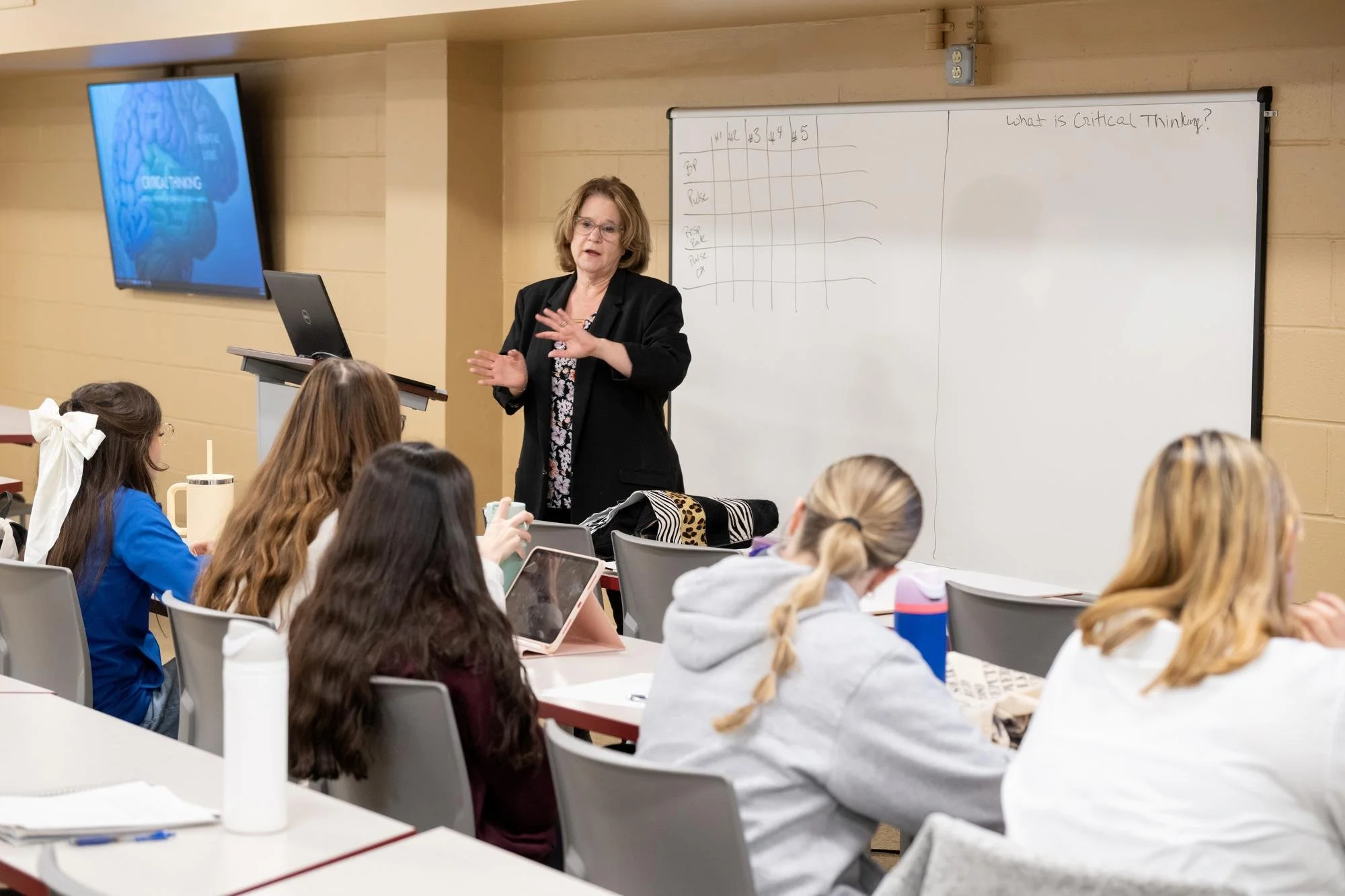
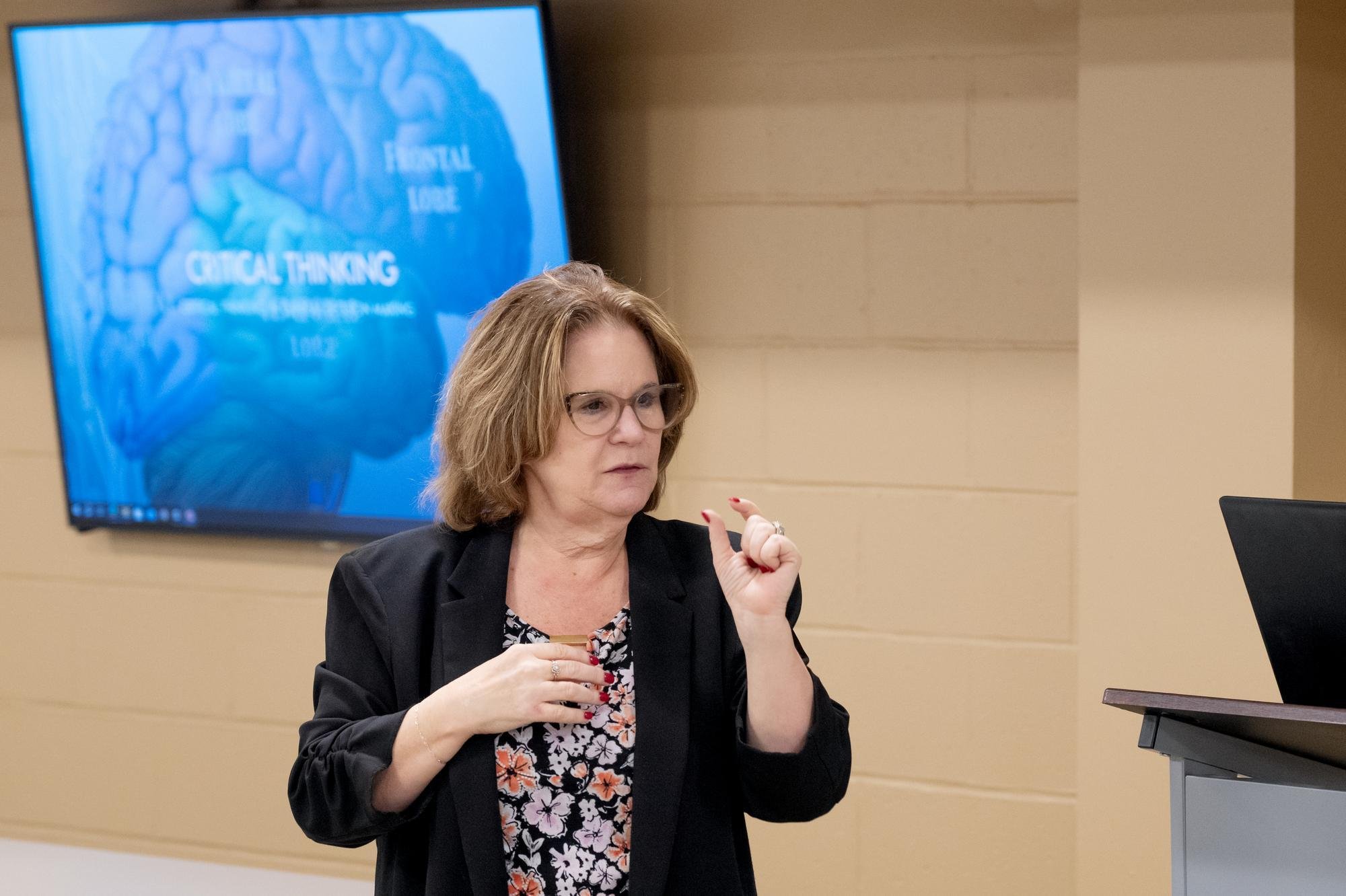
That was the core message delivered by Christina Bierling-Norris, PhD, RN, Regional Senior Director of Nursing for Westchester Medical Center, during a recent workshop for Mount nursing students. Titled “Acute Care Nursing: Critical Thinking and Clinical Reasoning,” the session challenged future nurses to treat thinking as a skill that can, and must, be honed just like any other clinical procedure.
Sponsored by the Mount’s Nursing Workforce Diversity program and the School of Nursing, the talk moved beyond textbook definitions to address the life-or-death reality of implicit bias.
Bierling-Norris presented sobering statistics to illustrate how unchecked assumptions affect patient outcomes. She noted that the U.S. maternal mortality rate is significantly higher for women of color: almost 50 out of 100,000, compared to the national average of 22.3. She also highlighted disparities in pain control for children of color in emergency rooms.
“You have to be very, very aware of where your own biases lie,” Bierling-Norris urged the students. “It’s these societal and cultural beliefs that we carry with us that we don't even recognize.”
By identifying problems, setting goals, and critically examining their own perceptions, she concluded, nurses can break these cycles and deliver the equitable care every patient deserves.
Cybersecurity experts discuss AI arms race
Photos by Matt Frey
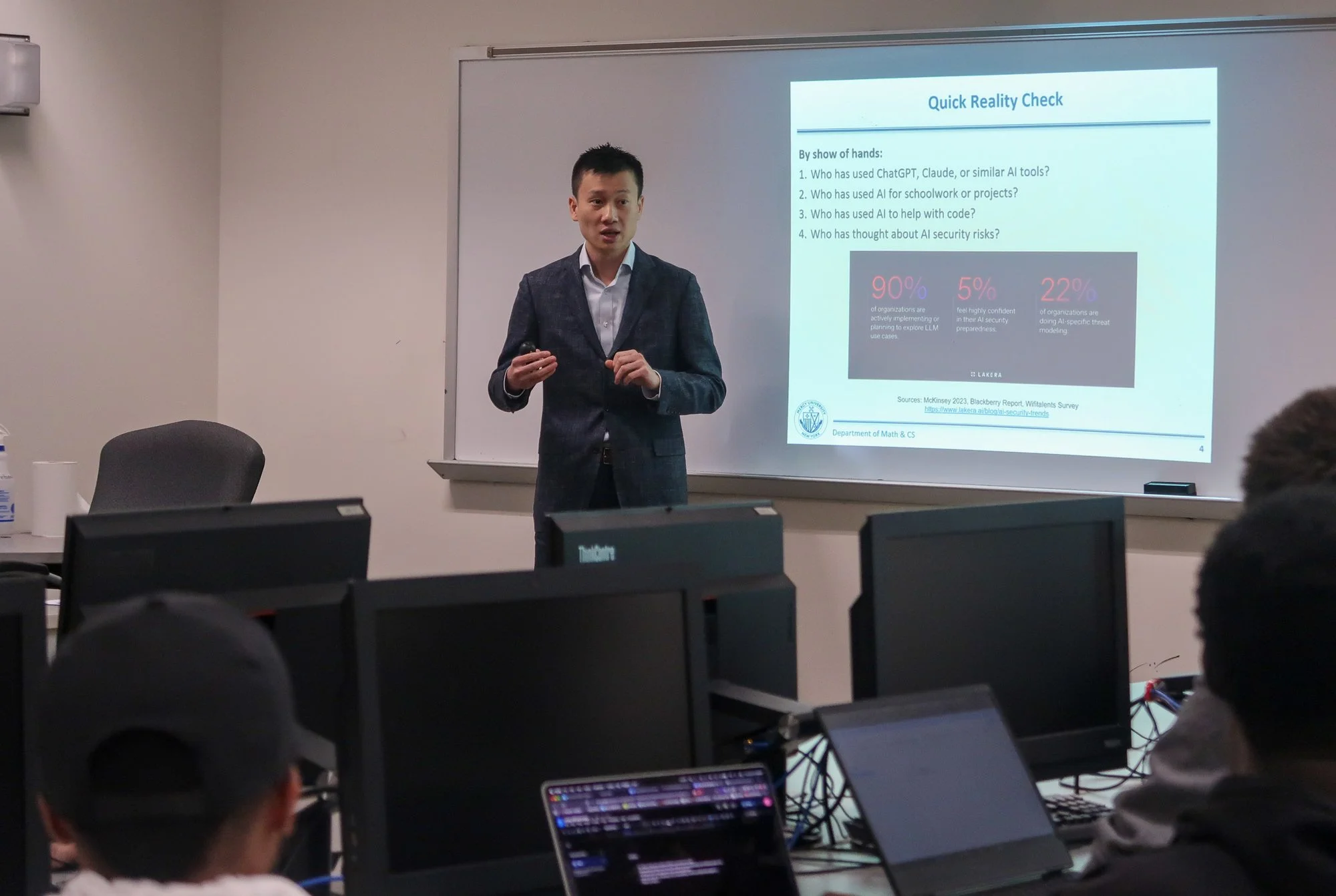
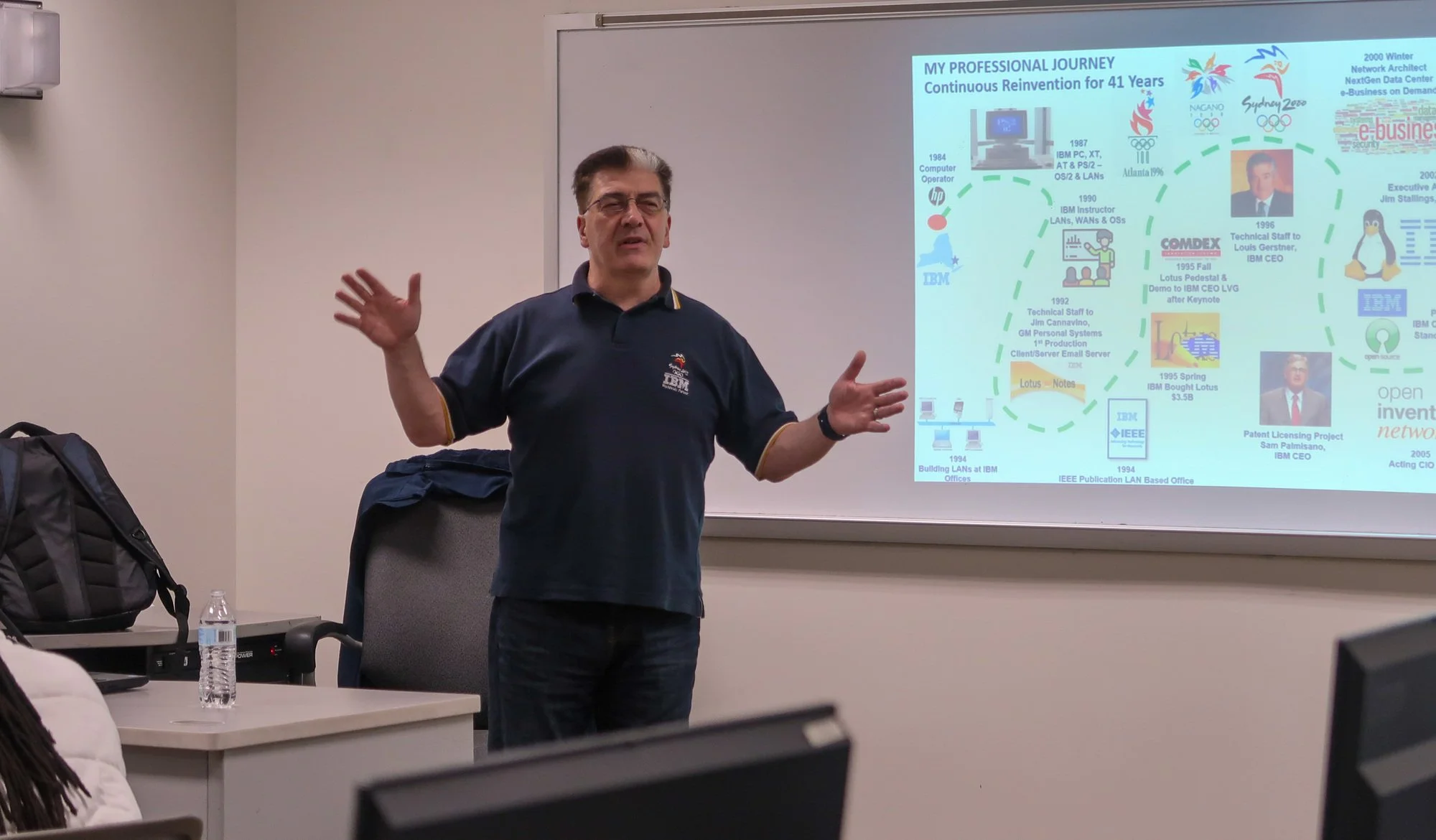
In celebration of Cybersecurity Awareness Month in October, the Mount’s Center for Cybersecurity hosted a pair of industry experts to dissect the double-edged sword of Artificial Intelligence.
Tianyu Wang, assistant professor of Computer Science at Mercy University and former IBM Data Scientist, highlighted a dangerous gap in the industry. While 90 percent of organizations are rushing to implement AI tools, only 22 percent have a strategy to defend against them.
“What if they can generate a perfect phishing email?” Wang asked, noting that tools like WormGPT allow bad actors to create flawless malicious code and scams with zero ethical guardrails.
This sentiment was echoed by Tony Cusato, manager of Global Cyber Security Risk Management at IBM. Drawing from 40 years of experience, Cusato described an escalating arms race where deepfakes and supercharged attacks are becoming the norm.
However, both experts agreed that the solution isn’t to retreat, but to adapt.
“The greatest skill that you can have is the ability to grow with the technology,” Cusato told students, noting that AI is now essential for predicting attacks and managing defense in real-time.
Art, Reality, Truth: ‘Artboii’ inspires next gen creatives
Photos by Lee Ferris
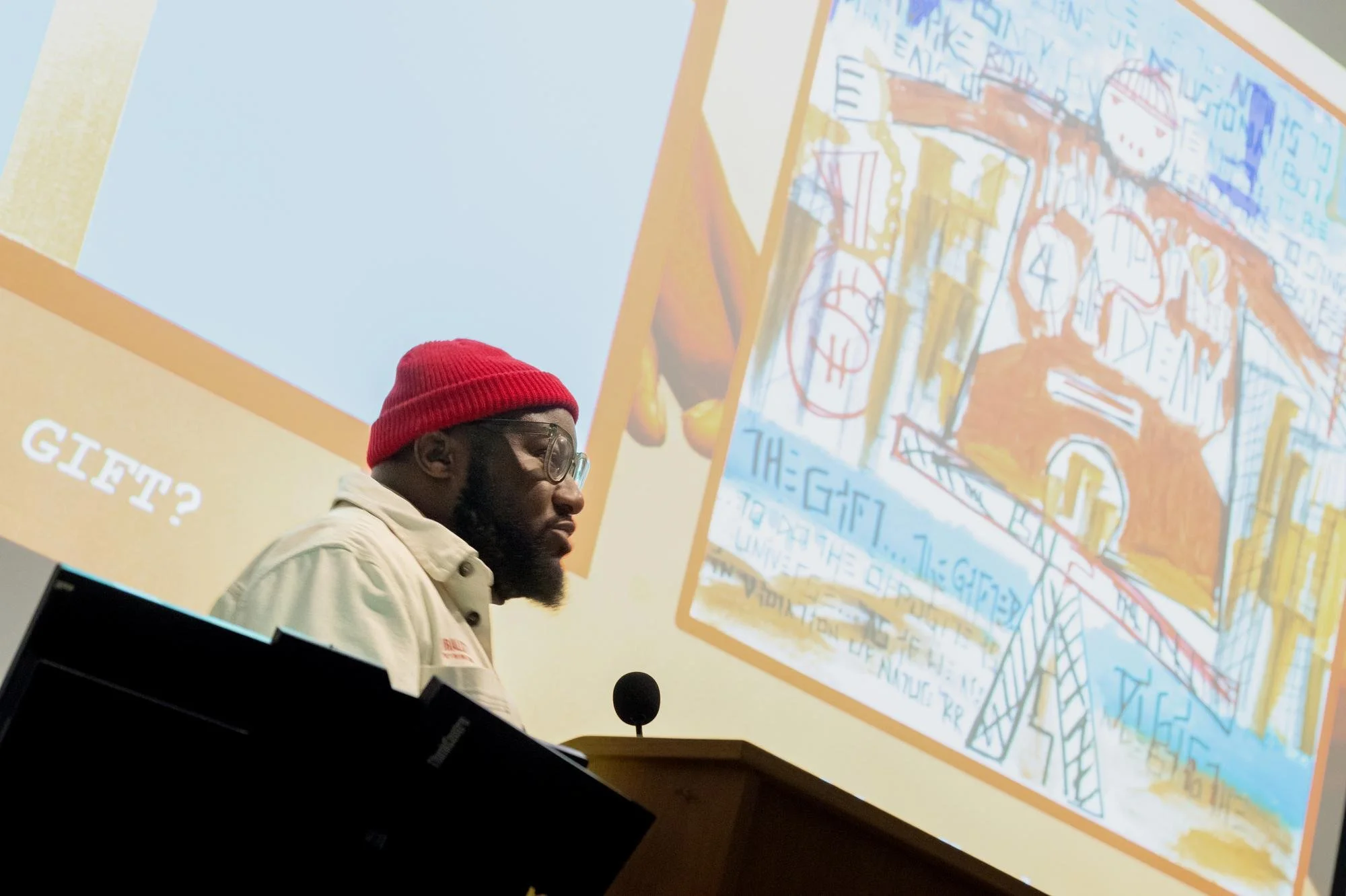
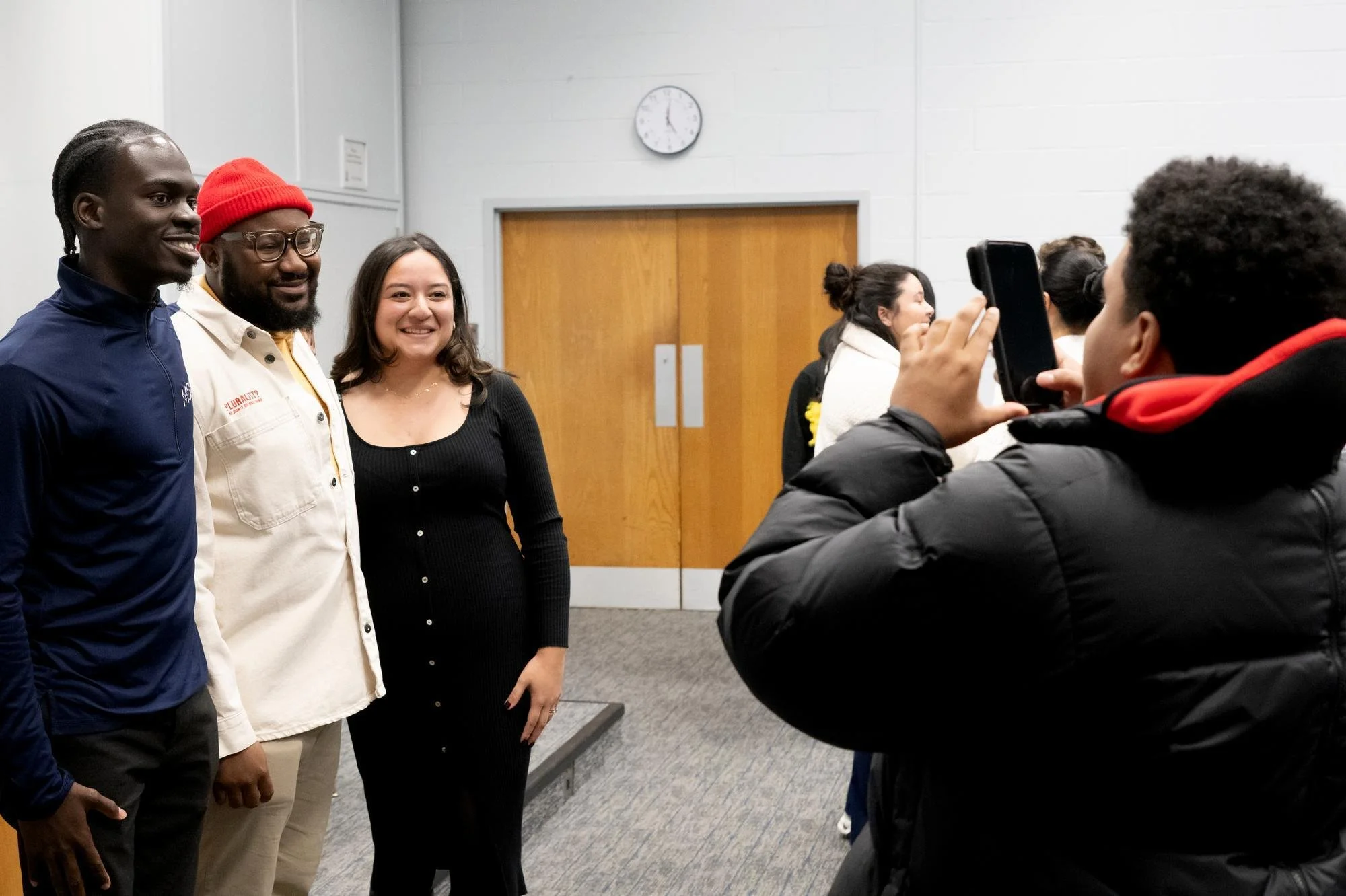
Danangelo “A.J.” Spencer ’17 returned to the Mount this semester with a message for aspiring artists: Success isn’t about waiting to be discovered, it’s about deciding who you are.
Spencer, an award-winning multidisciplinary artist known professionally as “Artboii,” presented “Art, Reality, Truth,” a candid talk that dismantled the "starving artist" myth. He encouraged students to embrace the role of the "Creative Pluralist"—someone who refuses to be boxed into a single medium—and to view “day jobs” as strategic tools that fund creative freedom.
His most practical advice centered on community. Spencer urged students to stop obsessing over industry gatekeepers (“networking up”) and start building with the talented peers sitting right next to them (“networking across”).
“The day that I decided to live my dream is the day that I started to live my dream,” Spencer told the crowd. “All you have to do is decide that that’s who you are. Everything else in between is just you doing the legwork.”
Psychologist Brad Sachs explores the ‘minefield’ of adulthood
Photos by Lee Ferris
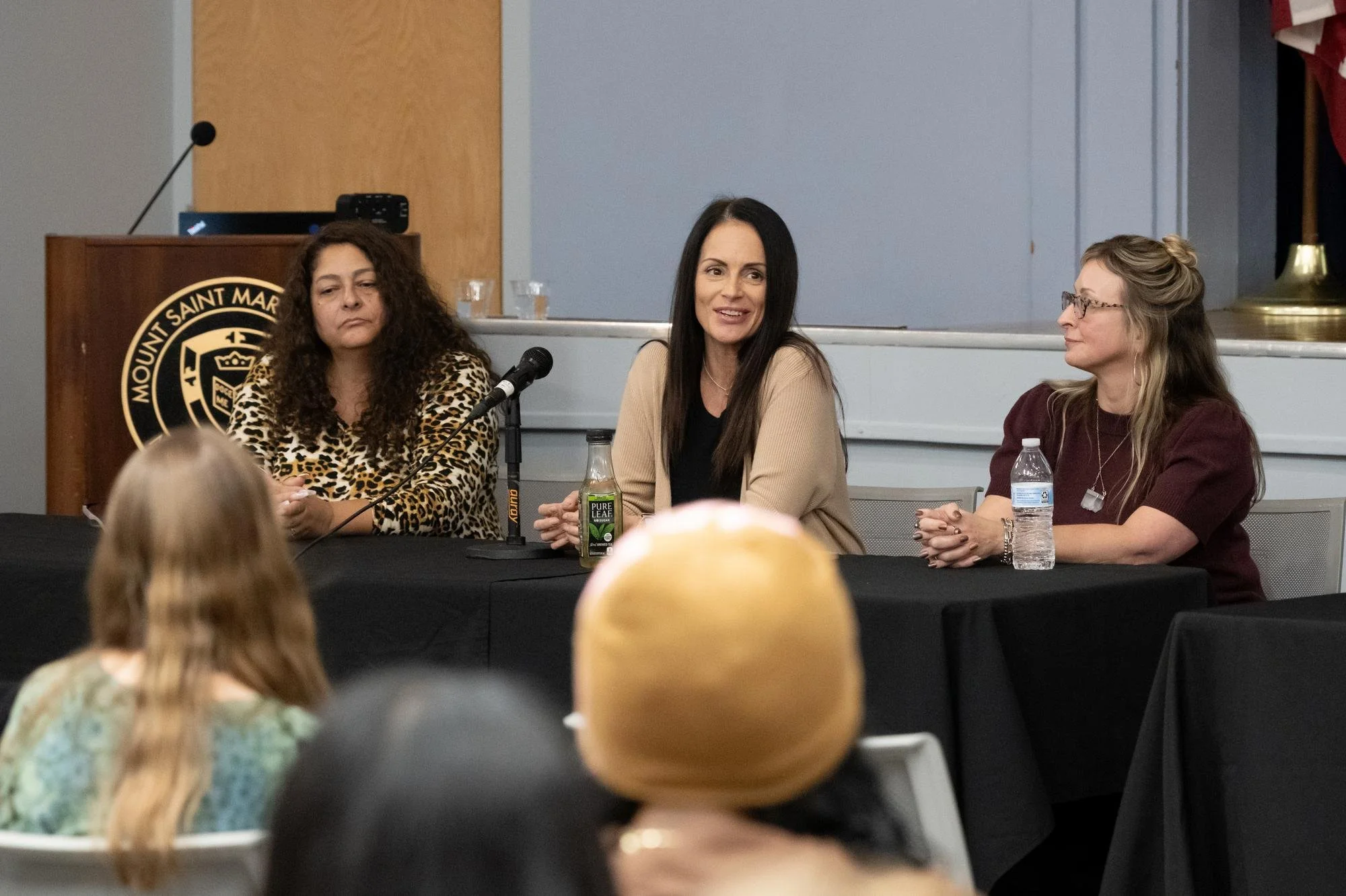
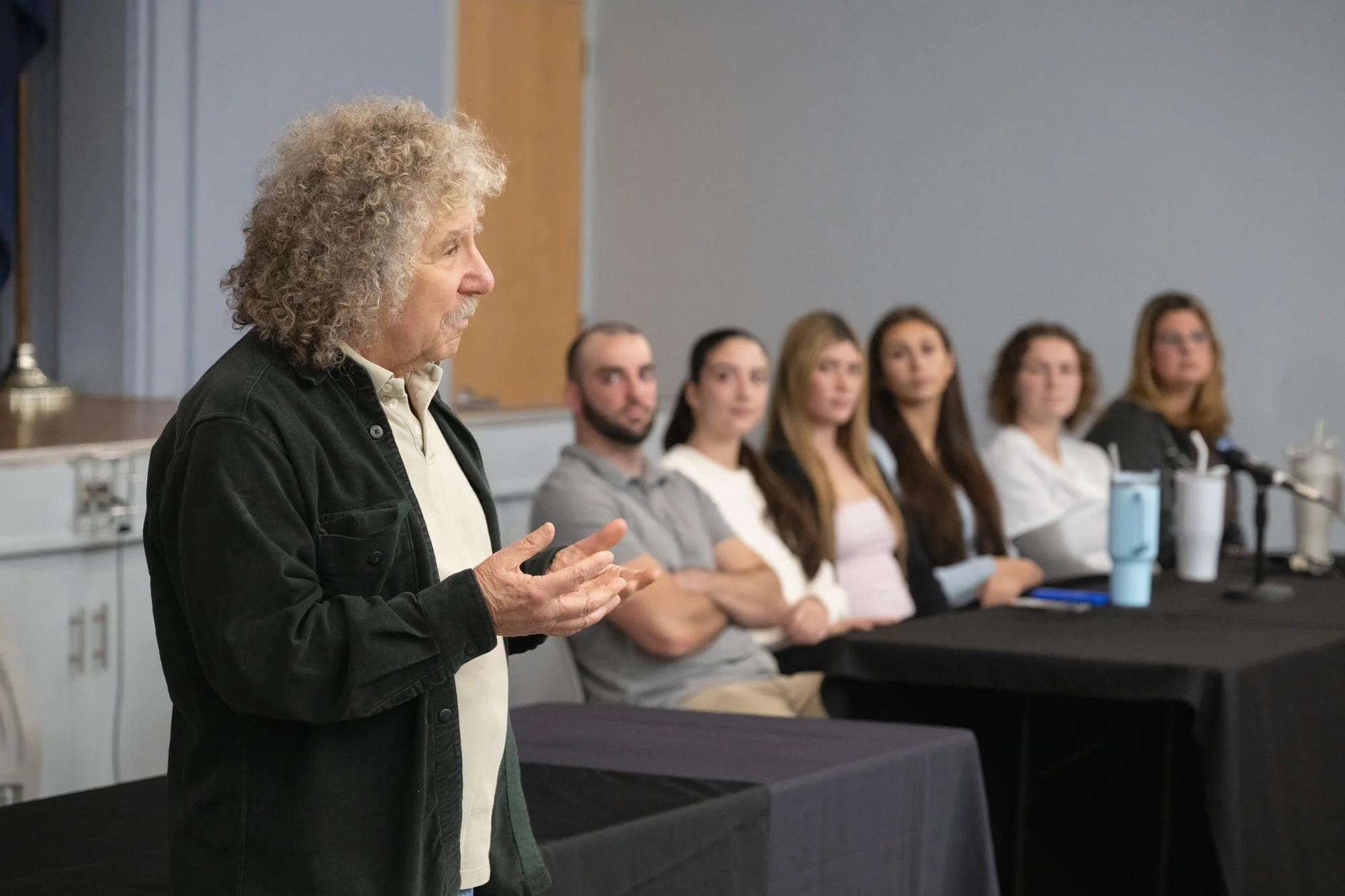
Becoming an adult isn’t just about landing a job – it’s about navigating a complex web of family dynamics.
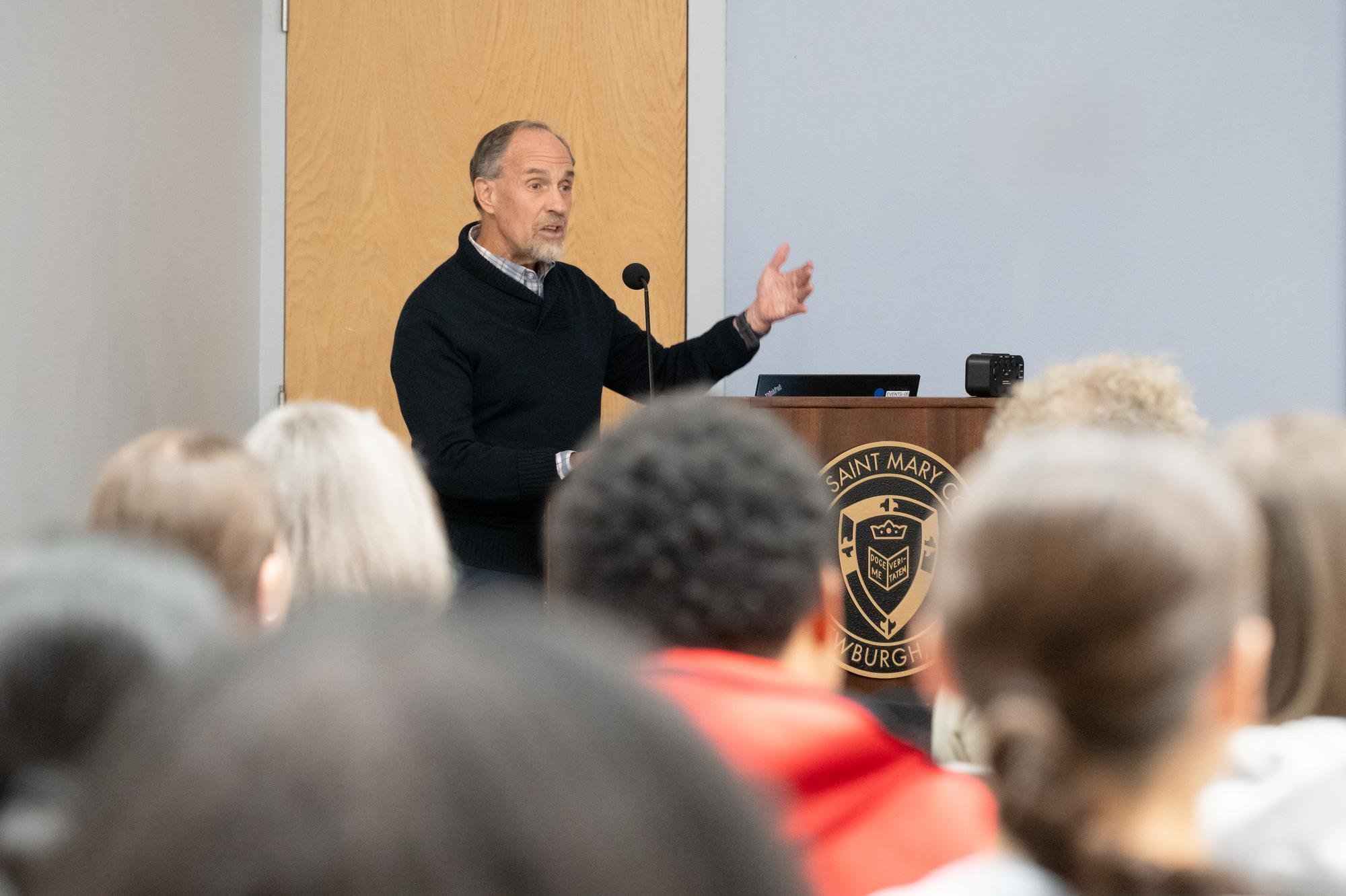
That was the central message from renowned family psychologist and best-selling author Brad Sachs during his recent keynote at the Mount, hosted by the Center for Adolescent Research and Development (CARD).
In his talk, “Pulling Anchor, Setting Sail,” Sachs drew from 40 years of clinical experience to explain how family structures shape (or hinder) independence. He categorized families into three distinct types:
Centripetal Families: Focused on maintaining the “cocoon,” where a child attempting to leave or differentiate is viewed as a betrayal.
Centrifugal Families: The opposite extreme, pushing young adults out the door “perhaps before they’ve got a full tank of gas.”
Mission Impossible Families: Creating a “complicated matrix of expectations” where the child is expected to fulfill conflicting marching orders from parents.
This misalignment often creates a “minefield” for young adults, Sachs noted, forcing them down “restricted, constricted boulevards” rather than allowing them to find their own unique path to identity.
Marc Bernier’s illusionist art on display in ‘Confined’
Photos by Lee Ferris
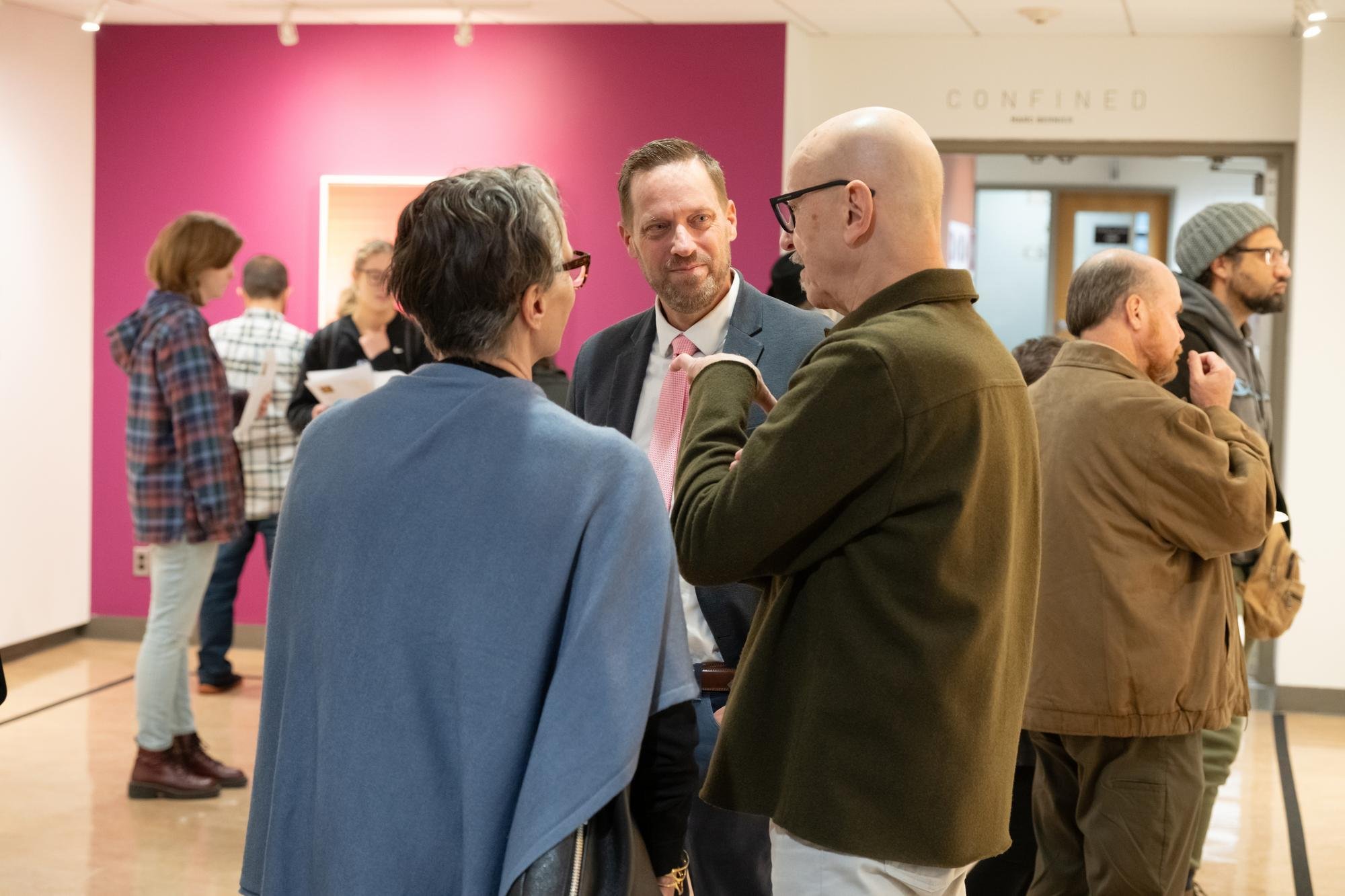
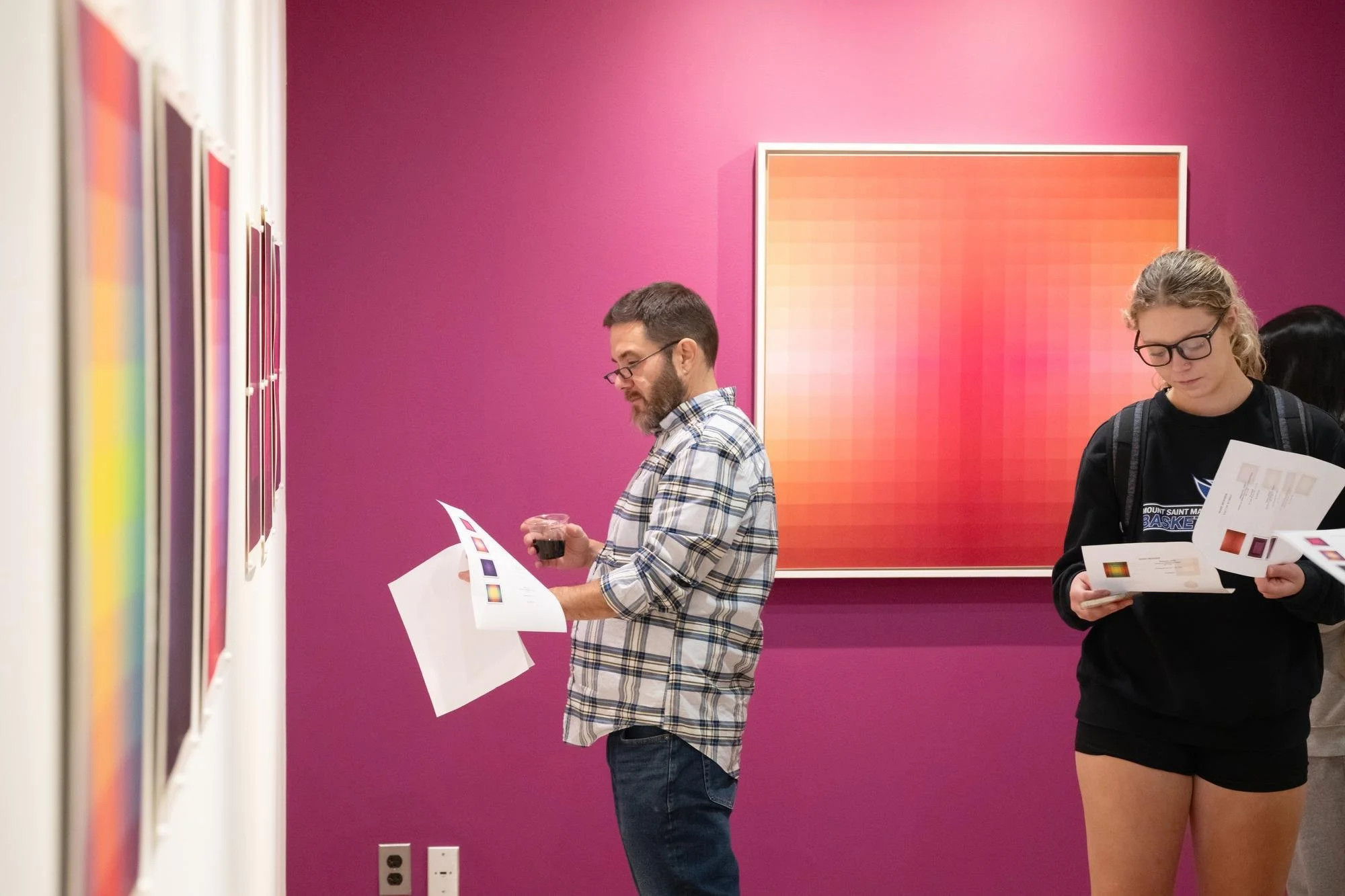
This past fall, the walls of the CMA Gallery in Aquinas Hall seemed to move on their own.
The exhibition Confined brought the abstract, geometric, and illusionist paintings of French-American artist Marc Bernier to campus. Known for exploring the dynamic interplay of color and light, Bernier’s work challenged viewers to question their own perception of depth and movement.
Despite the exhibition’s title, the art was anything but restricted. Bernier, a Hudson Valley resident with credits including the Musée d’Art Moderne, focused his collection on the paradox of artistic boundaries.
“I am interested in how an artwork, confined within its own finite and graphic borders, seems to expand beyond its physical nature,” Bernier noted. “How it can emanate, radiate, and grow in the mind of the viewer.”
Reclaiming the soul in the age of the scroll
Photo by Lee Ferris
In an era defined by constant notifications and infinite feeds, are we losing the ability to truly connect?
Joshua Hochschild, a professor of Philosophy at Mount St. Mary’s University, discussed this timely topic during the Mount’s annual Founders Day celebration in October. Hosted by the Catholic and Dominican Institute (CDI), Hochschild’s talk, “Friendship, Truth, and the Spiritual Challenges of Digital Distraction,” framed our relationship with technology not just as a habit, but as a spiritual crisis.
Hochschild, co-author of A Mind at Peace, described the digital revolution as a "grand social experiment" with perilous results: despite being more connected than ever, rates of loneliness and alienation are skyrocketing.
“Our brains weren’t intended for that environment, but now we’ve created one where anything, all the time, can demand our attention,” Hochschild explained.
The solution, he argued, isn’t smashing machines, but cultivating the “virtues of self-control.” He advocated for intentional, communal discipline – such as college campuses adopting phone-free meal times – to reclaim the mental space necessary for genuine friendship and personal peace.