When life gives you lemons, measure river flow: Inside a Wallkill River survey
Photos provided
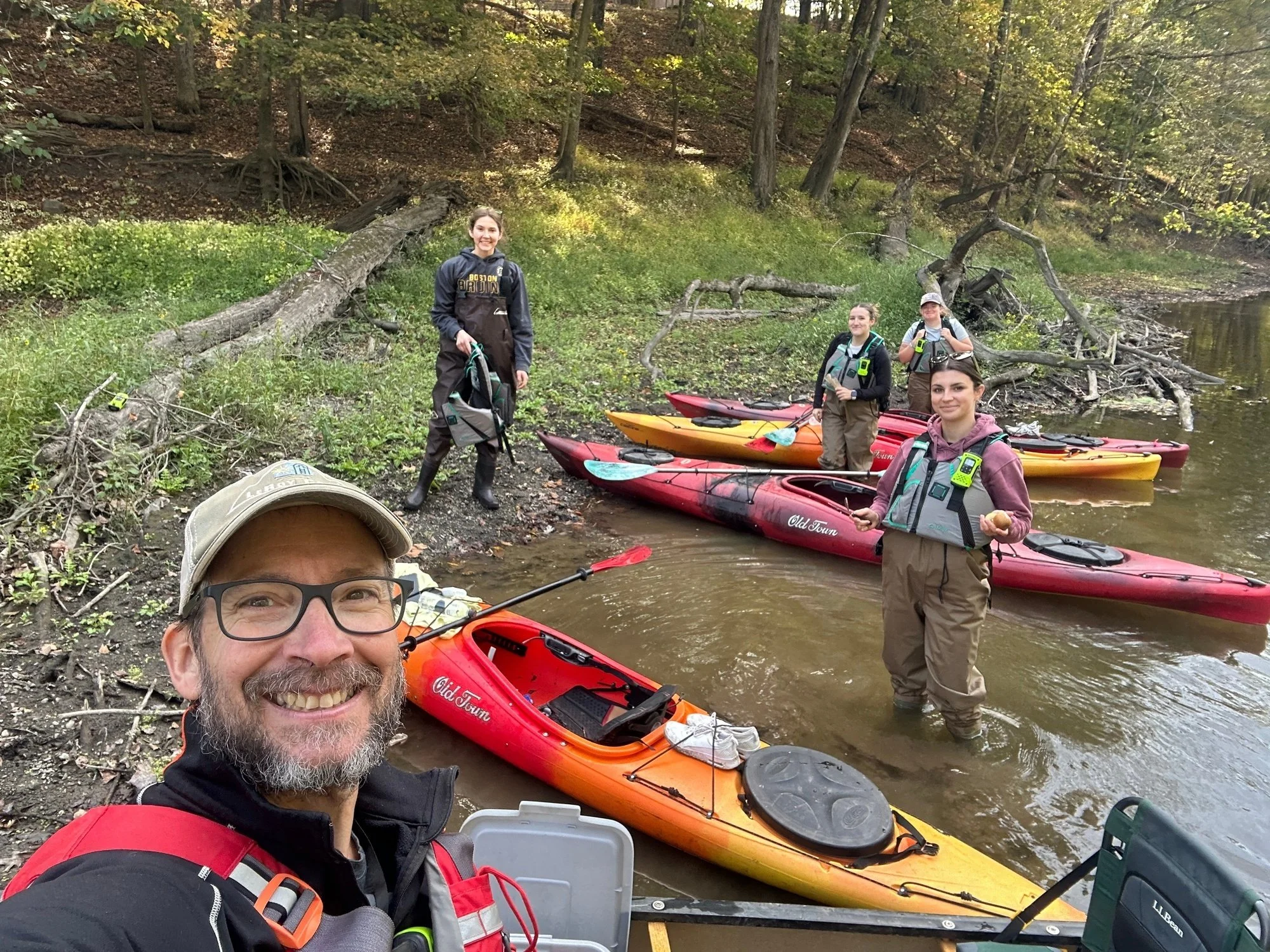
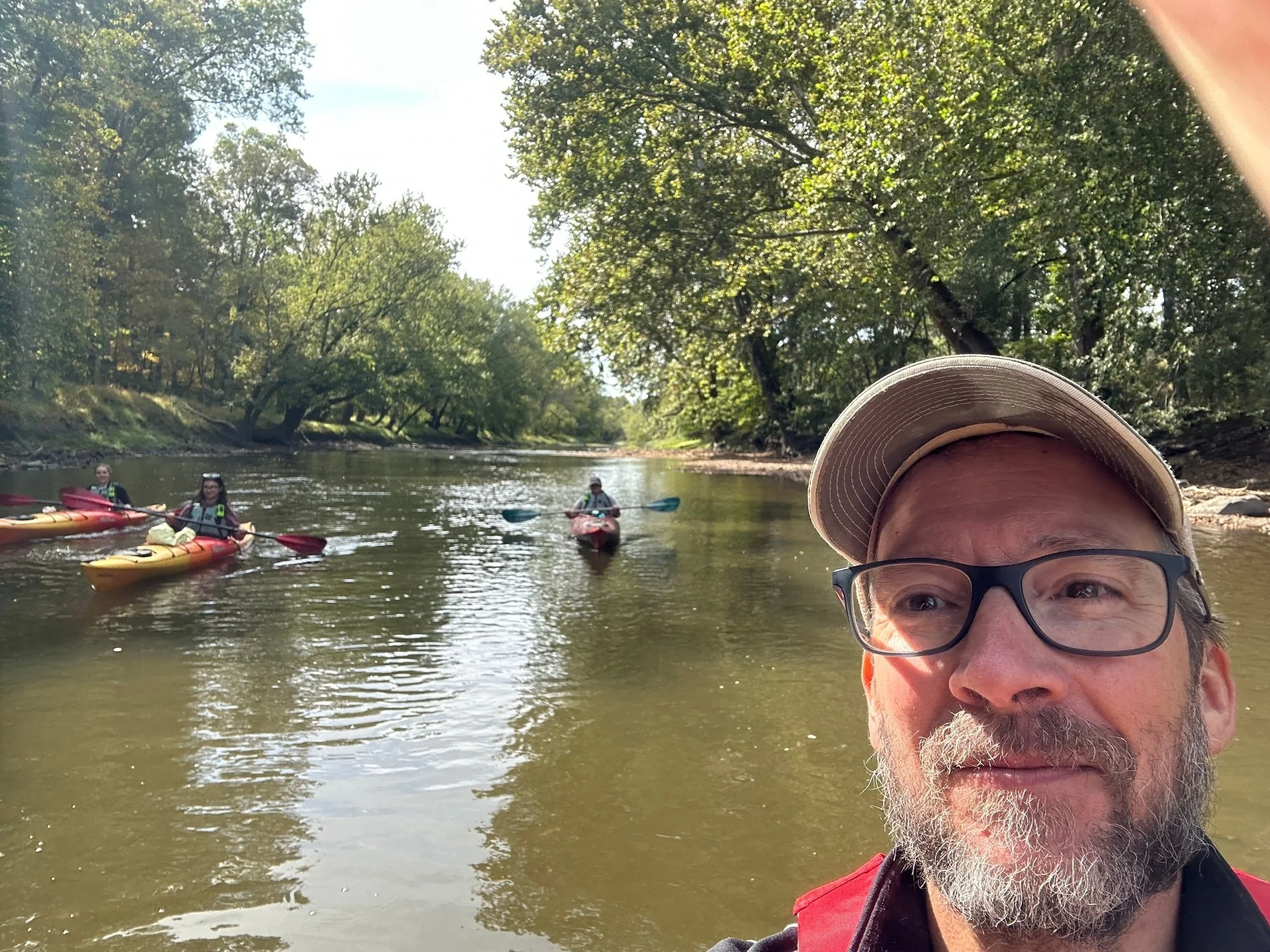
It was supposed to be a routine day of fieldwork for Doug Robinson and his ecology students early in the Fall 2025 semester: a quick paddle down the Wallkill River to assess water quality and habitat health. But as anyone who has spent time in the field knows, nature often has its own schedule.
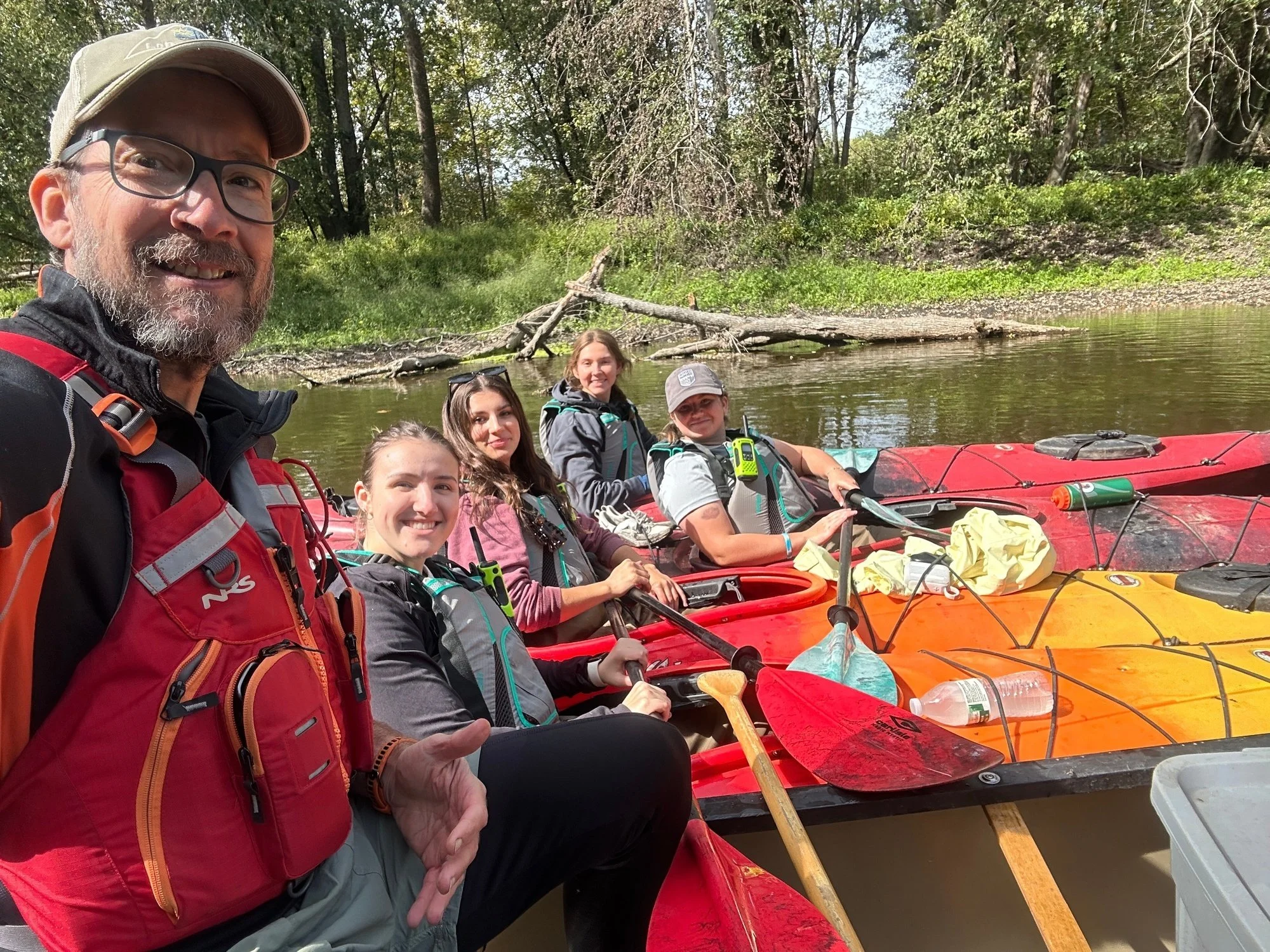
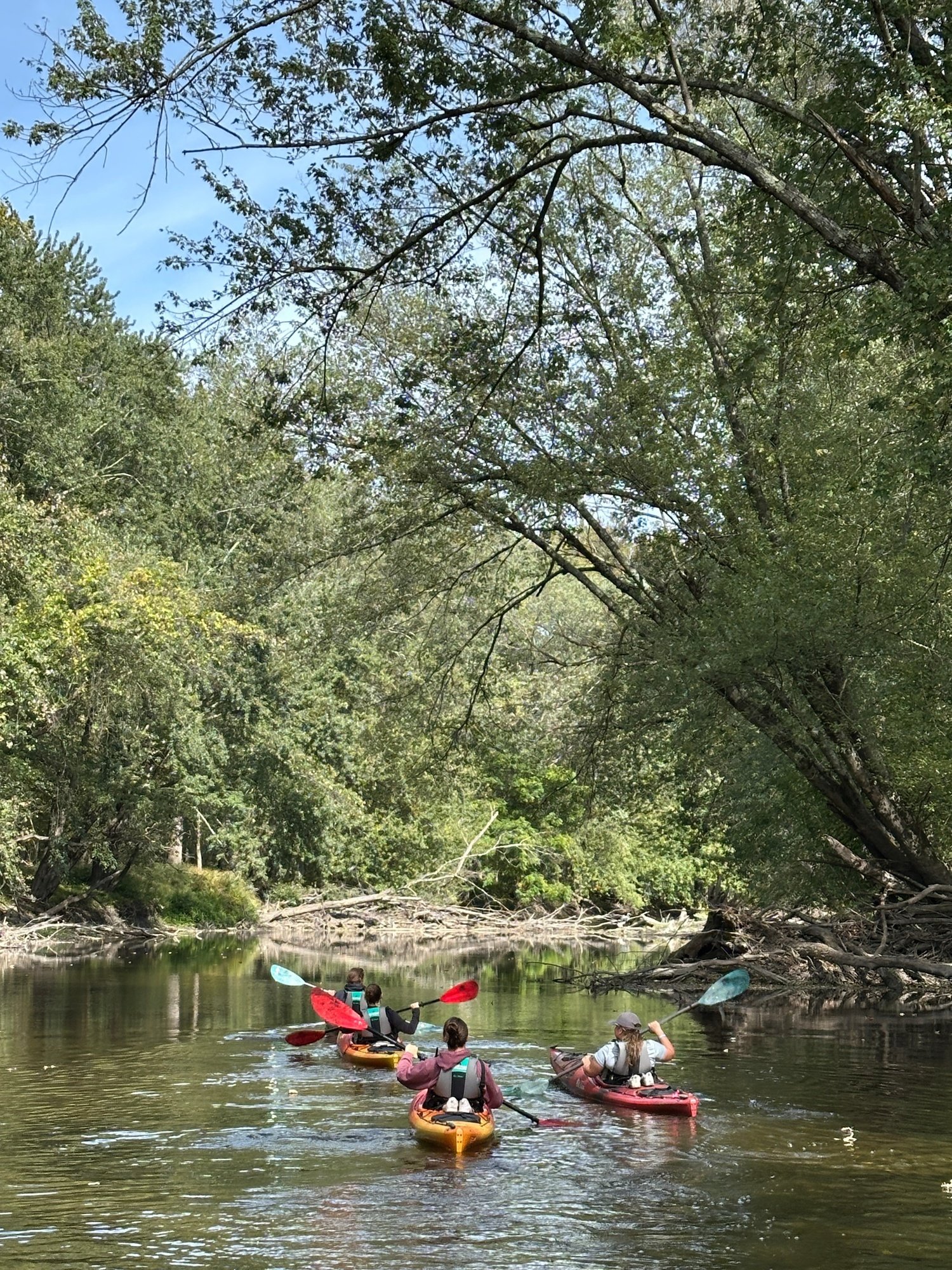
“That whole stretch of the river is about six miles long,” said Robinson, an associate professor of Biology, Chair of the Division of Natural Sciences, and Study Abroad Academic Coordinator. “It just took so long to get these things accomplished with a small group of students. That six-mile stretch of the river took about six hours.”
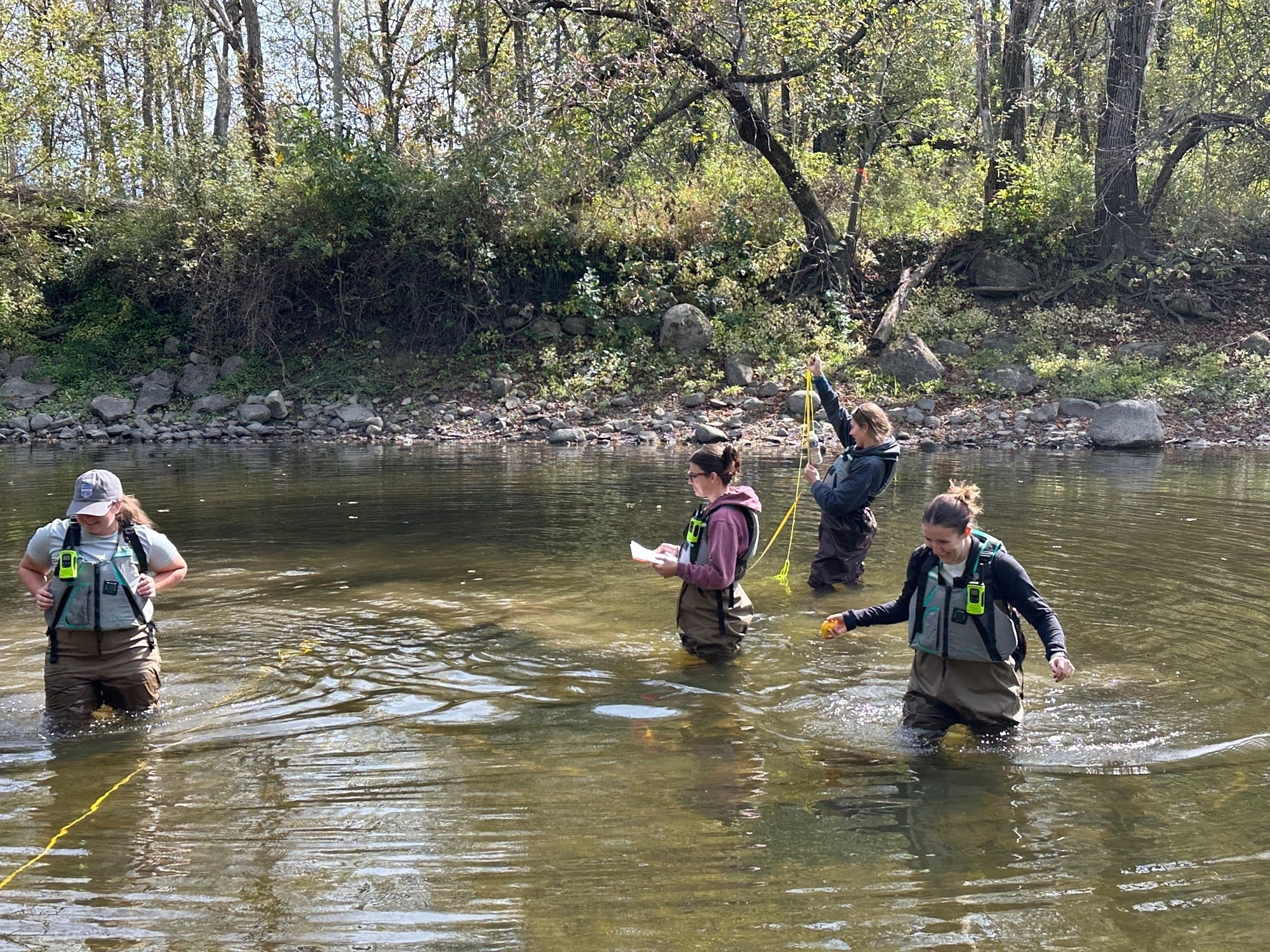
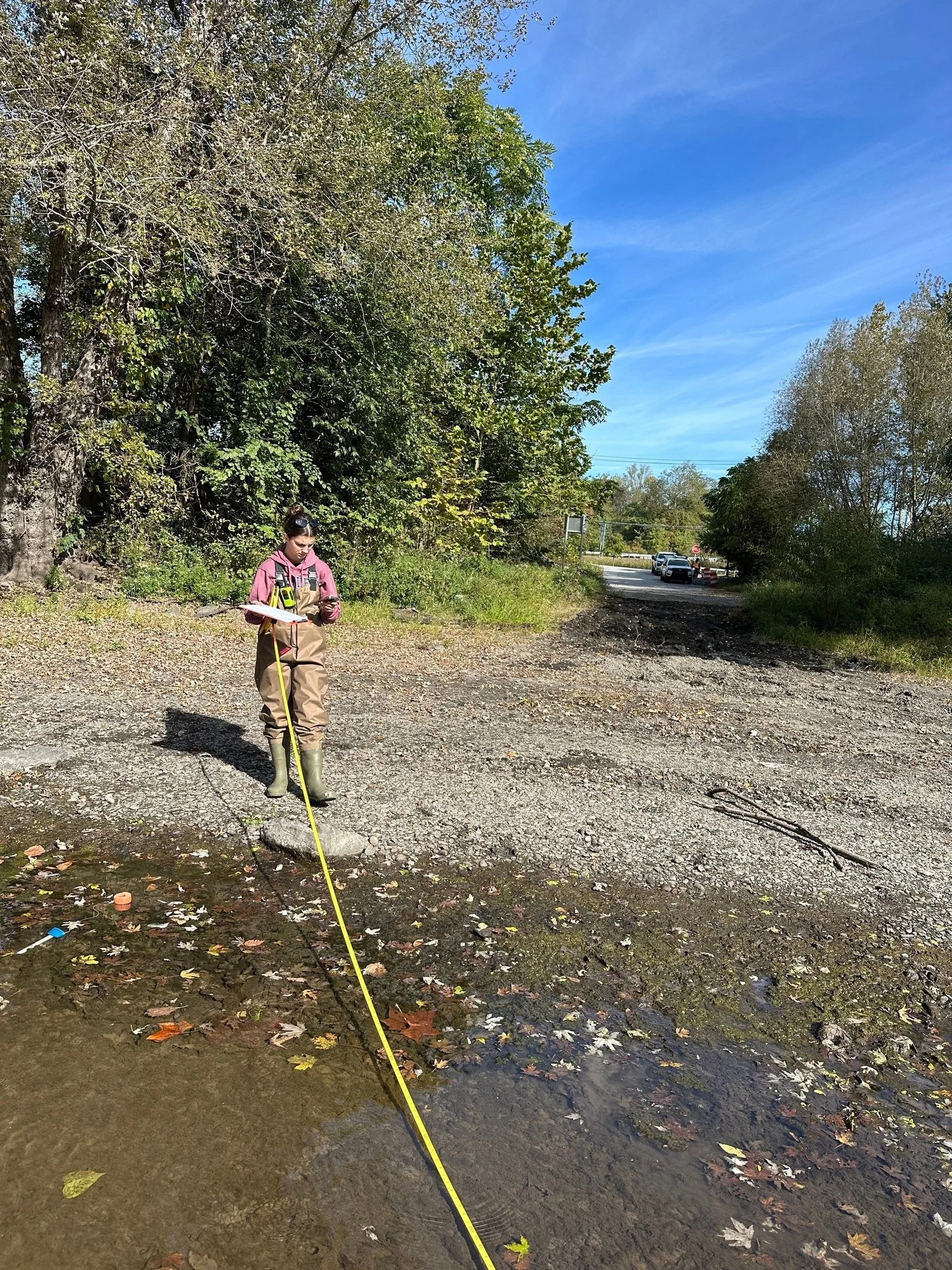
The project, part of an ongoing effort to monitor the health of the Wallkill River, saw Robinson and four students kayaking from the Crystal Run area in Middletown down to Thomas Bull Park in Montgomery. Their mission was comprehensive: measuring pH, conductivity, turbidity, depth, and flow at one-mile intervals, while also cataloging vegetation.
The Citrus Solution
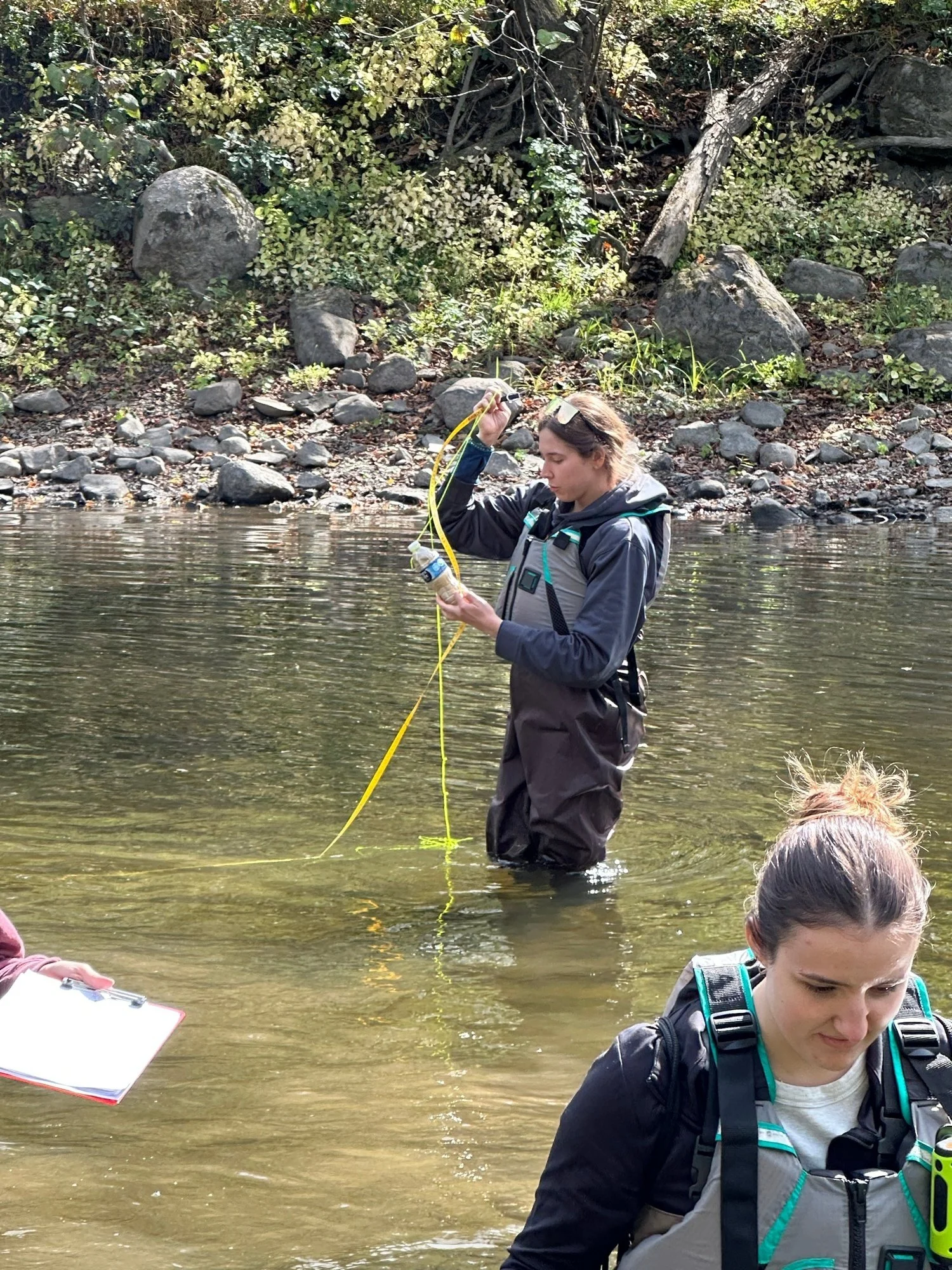
The most memorable moment of the expedition came from a piece of equipment failure – and a grocery store solution. When the team’s electronic flow meter, a device used to measure the speed of the water, became unavailable, Robinson turned to a classic, low-tech alternative known as the float method.
“One of the standardized techniques is to use an object that you drop in the water and you measure some distance and how long it takes to cover that distance,” he explained. “As odd as this sounds, the recommended object that you drop in a water is an orange, of all things.”
The choice of fruit is scientific, not arbitrary. Oranges are buoyant enough to float just below the surface, avoiding wind resistance while accurately representing the water’s current. However, the morning of the survey, Robinson’s refrigerator threw a curveball: “I thought I had an orange... lo and behold we didn’t, so we used a lemon.”
The lemon proved to be a capable understudy, allowing the team to maintain consistency across their data points. But the river had one final ironic twist in store for the weary researchers.
“We get to the second survey point and we’re about to get started,” said Robinson, “and what comes floating down the river? An orange. The students did not plant it... it was absolutely hilarious.”
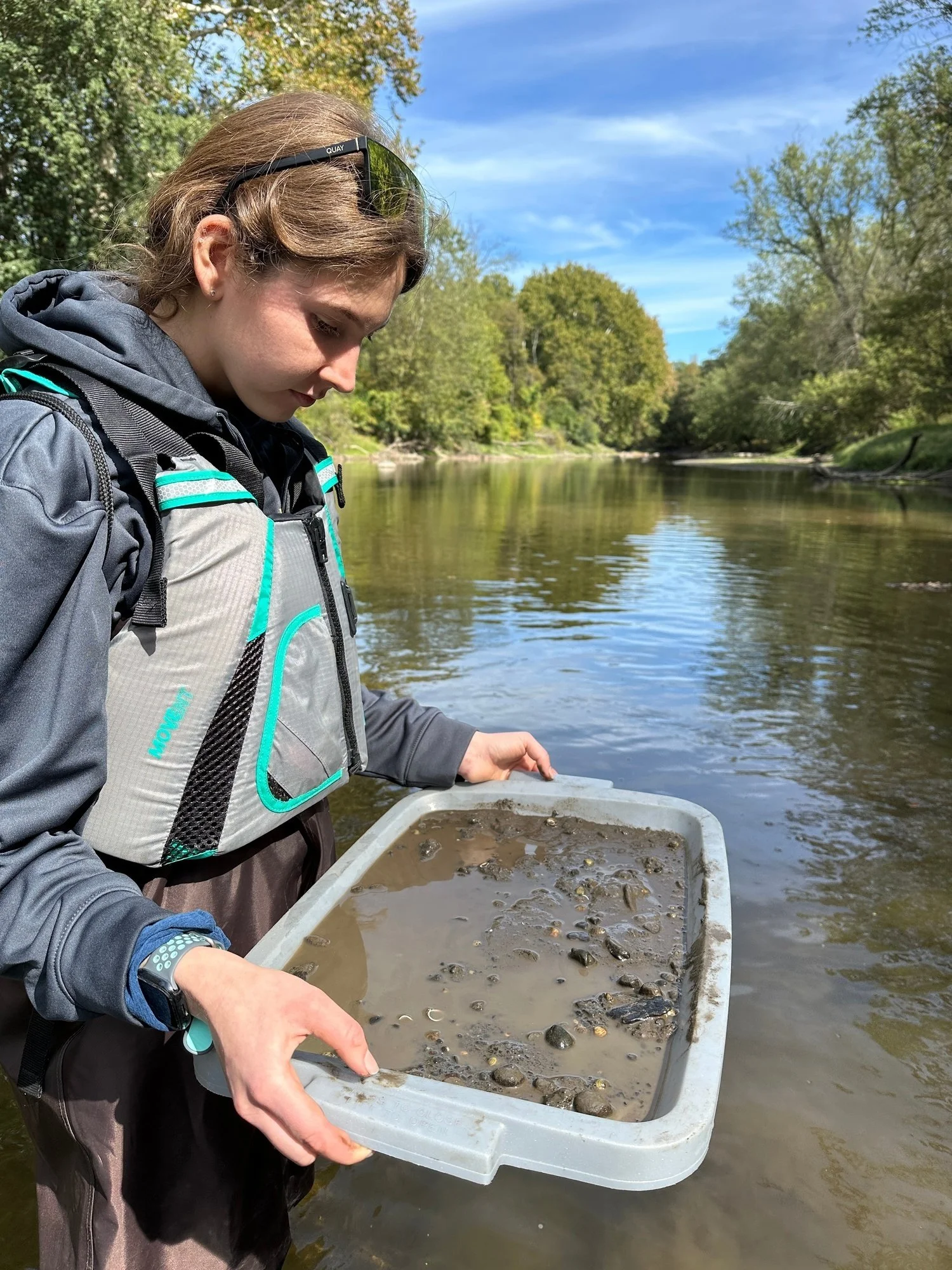
Photos provided
Beneath the Surface
Beyond the produce-based hydrodynamics, the survey yielded valuable biological data. In a follow-up excursion, Robinson returned to the water to focus on the river’s inhabitants. The team successfully landed four smallmouth bass, which provided a unique opportunity for the students to learn about fish biology and aging techniques without harming the wildlife.
“We collected a couple of scales,” Robinson noted. “The scales have on them rings called annuli... we can press them onto paraffin wax and then look at them under a microscope to determine how old they are. So the annuli are growth rings that are evident on the fish scales.”
For the students involved, the long days on the water offered something a textbook never could: the gritty, unpredictable reality of scientific research.
“It made doing the survey work from two weeks ago very easy,” Robinson said, describing how the students navigated the river. From handling kayaks and securing canoes with ratchet straps to calculating flow rates with citrus fruit, the experience was a crash course in the logistics of field ecology.
Despite the grueling six-hour paddle and the low water levels that required navigating survey sites carefully, the project was a success. The data collected on canopy cover, water chemistry, and fish populations will add to the growing body of knowledge regarding the Wallkill River’s ecosystem.
As for the lemon, it served its purpose: It proved that in science, adaptability is just as important as accuracy.
Though next time, Robinson has vowed to double-check the fruit drawer before heading out to the next river survey.